.png)
Bridging the Gap: How Diorama Eduversity Transforms Classroom Learning into Industry Skills

Education often struggles to keep pace with the rapidly changing demands of the industry. Many students graduate with theoretical knowledge but lack the practical skills that employers seek. Diorama Eduversity addresses this challenge by offering a unique learning experience that connects classroom concepts directly to real-world applications. Their vision centers on practical learning that equips students with industry-ready skills, making the transition from education to employment smoother and more effective.
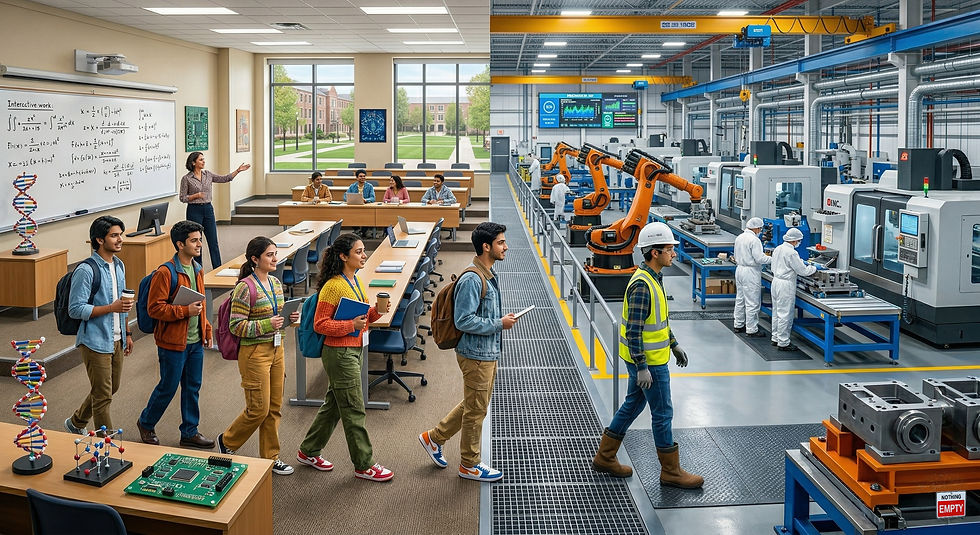
The Challenge of Traditional Education
Traditional education systems often emphasize theory over practice. Students spend most of their time memorizing concepts and preparing for exams, but they rarely get the chance to apply what they learn in real-world scenarios. This gap creates several problems:
Graduates feel unprepared for actual job roles.
Employers find it difficult to hire candidates who can immediately contribute.
Students lose motivation when they cannot see how their studies relate to future careers.
This disconnect between classroom learning and industry expectations calls for a new approach to education—one that Diorama Eduversity has embraced fully.
Diorama Eduversity’s Vision for Practical Learning
Diorama Eduversity was founded with a clear mission: to provide education that goes beyond textbooks and lectures. Their focus is on hands-on learning and skill development that matches industry standards. This approach helps students build confidence and competence in their chosen fields.
Key elements of their vision include:
Industry-relevant curriculum: Courses are designed in collaboration with industry experts to ensure relevance.
Project-based learning: Students work on real projects that simulate workplace challenges.
Skill development workshops: Regular sessions focus on technical skills, soft skills, and problem-solving.
Internships and live projects: Partnerships with companies allow students to gain real-world experience before graduating.
By integrating these elements, Diorama Eduversity creates an environment where students learn by doing, preparing them for the demands of their future careers.
How Practical Learning Works at Diorama Eduversity
The core of Diorama Eduversity’s approach is the real diorama experience—an immersive learning method that blends theory with practice. Here’s how it works:
1. Learning Through Real Projects
Instead of abstract assignments, students engage in projects that mirror industry tasks. For example, engineering students might design and build prototypes, while IT students develop software solutions for actual business problems. This method helps students understand the practical application of their knowledge.
2. Collaboration with Industry Professionals
Industry experts regularly visit the campus to guide students, provide feedback, and share insights. This interaction exposes students to current industry trends and expectations, making their learning more relevant and up-to-date.
3. Use of Modern Tools and Technologies
Diorama Eduversity invests in state-of-the-art labs and equipment. Students get hands-on experience with the tools and technologies they will use in their careers, from advanced software to manufacturing machinery.
4. Continuous Assessment and Feedback
Instead of relying solely on exams, Diorama Eduversity uses continuous assessment methods. Students receive regular feedback on their projects and skills, allowing them to improve continuously and stay aligned with industry standards.
Real-Life Success Stories
The impact of Diorama Eduversity’s approach is evident in the success of its students. Here are a few examples:
A software development student who worked on a live project with a startup secured a job offer even before graduation because of the practical experience gained.
An engineering graduate who designed a cost-effective prototype during a workshop was able to patent the idea and attract investor interest.
A marketing student who participated in a real campaign for a local business developed skills that helped land a position at a leading firm.
These stories highlight how practical learning bridges the gap between education and employment.
Benefits for Students and Employers
The practical learning model at Diorama Eduversity offers clear advantages:
For Students
Gain hands-on experience that builds confidence.
Develop skills that match industry needs.
Improve employability and career readiness.
Build a portfolio of real projects to showcase to employers.
For Employers
Access to graduates who can contribute from day one.
Reduced training time and costs.
Stronger collaboration with educational institutions.
Opportunity to influence curriculum and skill development.
This win-win situation strengthens the overall ecosystem of education and industry.
How Other Institutions Can Learn from Diorama Eduversity
Diorama Eduversity’s model provides a blueprint for other educational institutions aiming to improve their relevance and impact. Key takeaways include:
Engage industry partners to design and update curriculum.
Focus on project-based learning that simulates real work environments.
Invest in modern infrastructure and tools for practical training.
Encourage continuous feedback and skill assessment.
Promote internships and live projects to provide real-world exposure.
By adopting these strategies, institutions can better prepare students for the workforce and reduce the gap between education and employment.
The Future of Education and Industry Collaboration
As industries evolve, education must adapt quickly. Diorama Eduversity’s approach shows that practical learning and strong industry ties are essential for future-ready education. The model encourages lifelong learning, adaptability, and a mindset focused on solving real problems.
Students trained in this way are more likely to succeed and contribute meaningfully to their fields. Institutions that follow this path will help build a skilled workforce that drives innovation and growth.


.png)


Comments