.png)
Crafting an Impactful Resume for Indian College Students Navigating the Corporate World

Landing a job after college in India often depends on one crucial document: your resume. A strong resume can open doors to interviews and opportunities, while a weak one may get overlooked. For Indian college students and fresh graduates, understanding how to build a resume that aligns with Indian academic grading and corporate preferences is essential. This guide offers practical steps and examples to help you create a resume that stands out in today’s competitive job market.

Understand the Indian Grading System and Its Role in Your Resume
Indian universities typically use percentage marks or CGPA (Cumulative Grade Point Average) on a 10-point scale. Recruiters often look for clear academic performance indicators, so presenting your grades accurately is important.
Mention your CGPA or percentage clearly
For example:
CGPA: 8.2/10 or Percentage: 82%
Include class or division if applicable
For example:
First Division (60% and above) or Distinction
Explain grading scale briefly if your university uses a unique system
This helps recruiters unfamiliar with your institution understand your performance.
If you have a strong academic record, place it near the top of your resume under an Education section. If your grades are average, focus more on skills and projects.
Structure Your Resume for Indian Recruiters
Indian recruiters prefer resumes that are clear, concise, and easy to scan. Follow this structure:
Contact Information
Include your full name, phone number, professional email, and LinkedIn profile if available.
Objective or Summary (Optional)
A brief 2-3 line statement about your career goals and what you bring to the table.
Education
List your college, degree, year of graduation, and grades. Mention relevant coursework if it relates to the job.
Skills
Highlight technical skills (programming languages, software tools) and soft skills (communication, teamwork).
Projects and Internships
Describe your role, technologies used, and outcomes. Use bullet points for clarity.
Achievements and Certifications
Include awards, scholarships, and relevant certifications.
Extracurricular Activities
Showcase leadership roles, volunteer work, or participation in clubs.
Languages (if relevant)
Mention languages you speak, especially if applying to companies with regional preferences.
Use Keywords and Tailor Your Resume for Each Job
Indian companies often use Applicant Tracking Systems (ATS) to filter resumes. Use keywords from the job description to increase your chances of passing these filters.
Read the job posting carefully
Include relevant skills and terms exactly as they appear
Avoid stuffing keywords; keep the language natural
For example, if a job requires “Java programming” and “team collaboration,” mention these explicitly in your skills and project descriptions.
Highlight Internships and Practical Experience
Many Indian companies value internships and hands-on experience highly. If you have completed internships, describe your responsibilities and achievements clearly.
Example:
Software Development Intern, XYZ Technologies, Mumbai
Developed a web application using JavaScript and React
Collaborated with a team of 5 to improve user interface, increasing user engagement by 15%
If you lack formal internships, include academic projects or freelance work that demonstrate your skills.
Keep Your Resume Concise and Error-Free
Indian recruiters often review many resumes quickly. Keep your resume to one page if you have less than two years of experience. Use bullet points and short sentences to improve readability.
Proofread carefully to avoid spelling or grammatical errors. Use simple fonts like Arial or Calibri and keep font size between 10 and 12 points.
Use Action Verbs and Quantify Achievements
Start bullet points with action verbs such as “developed,” “led,” “designed,” or “improved.” Whenever possible, add numbers to show impact.
Example:
Led a team of 4 students to organize a technical fest with 300+ participants
Improved website loading speed by 20% through code optimization
Quantifying achievements makes your resume more convincing.
Avoid Common Resume Mistakes
Do not include personal details like religion, caste, or marital status unless specifically asked
Avoid using photos unless the employer requests them
Do not exaggerate skills or experience
Avoid using jargon or abbreviations unfamiliar to recruiters
Do not include irrelevant information such as hobbies unless they add value
Use a Professional Email and LinkedIn Profile
Your email should be simple and professional, ideally your name or a variation. Avoid nicknames or informal handles.
Create or update your LinkedIn profile to match your resume. Many Indian recruiters check LinkedIn profiles to verify information and assess professionalism.
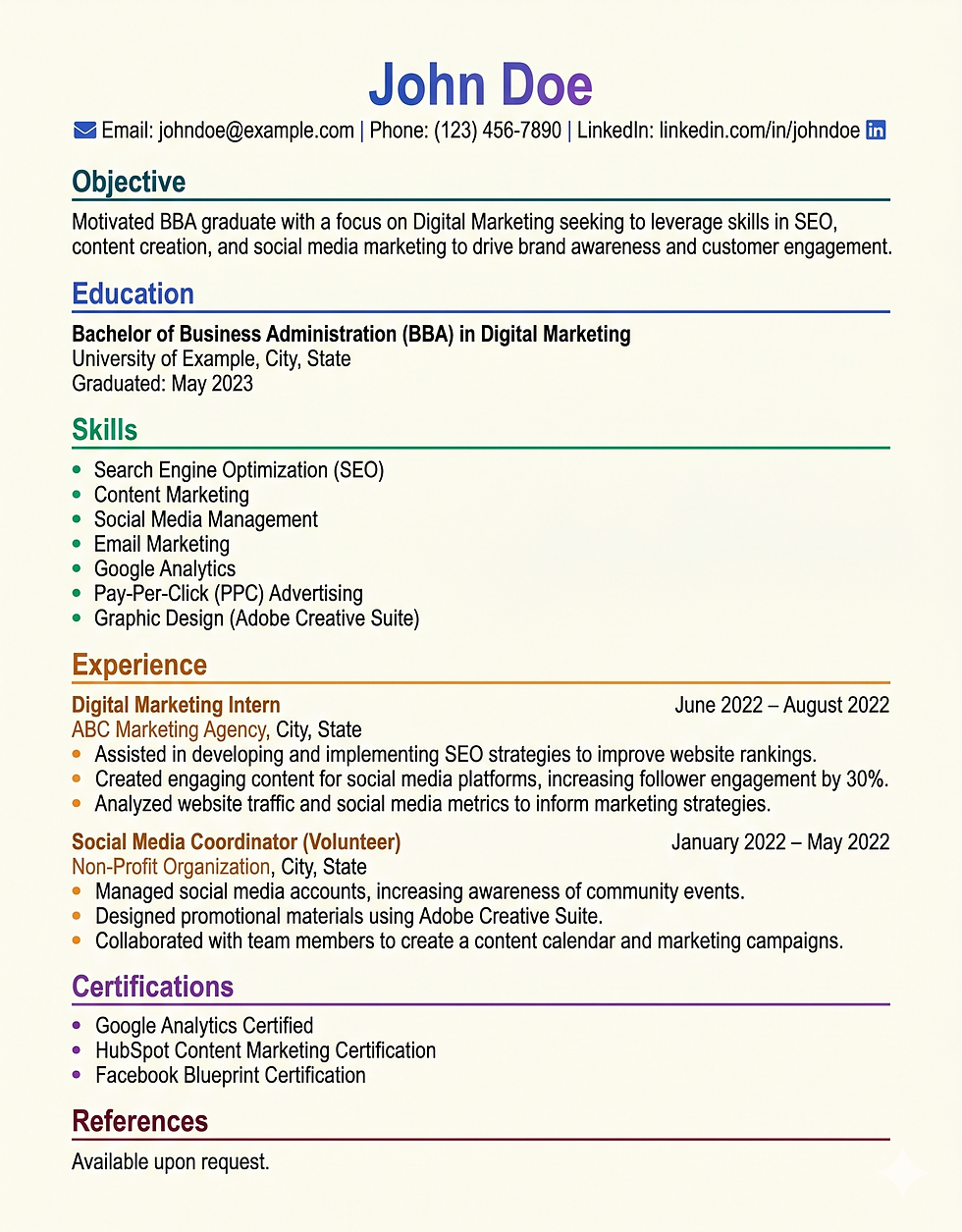
Sample Resume Snippet for Indian College Students
Final Thoughts on Building a Strong Resume
Creating a strong resume is a crucial step in the job application process. It serves as your first impression to potential employers and can significantly impact your chances of landing an interview. Here are some key points to consider:
Tailor Your Resume: Customize your resume for each job application, highlighting the most relevant experiences and skills that align with the job description.
Keep It Concise: Aim for clarity and brevity. A one-page resume is often sufficient, especially for early-career professionals.
Use Action Verbs: Start bullet points with strong action verbs to convey your accomplishments effectively and dynamically.
Quantify Achievements: Whenever possible, include numbers and metrics to showcase your impact in previous roles.
Professional Formatting: Use a clean, professional layout that is easy to read. Ensure consistent font styles and sizes throughout.
Proofread: Always check for spelling and grammatical errors. A polished resume reflects attention to detail.
By following these tips, you can create a resume that not only showcases your qualifications but also stands out to employers in a competitive job market. Remember, your resume is a living document; update it regularly as you gain new experiences and skills.


.png)


Comments