.png)
How Industry Exposure Revolutionized My Career Aspirations

Entering the professional world fundamentally altered my understanding of my career. Prior to gaining industry experience, my objectives were indistinct and largely based on assumptions. After spending time in a professional environment, I discovered new interests, skills, and opportunities that reshaped my ambitions. This post shares how firsthand experience in the industry transformed my career path and offers insights for anyone looking to clarify their own goals.
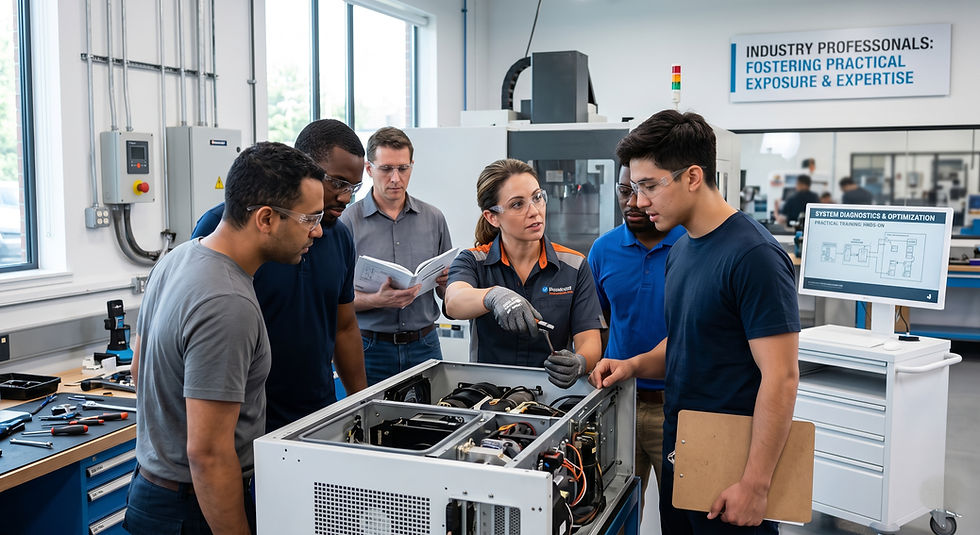
Many students and early-career professionals face a disconnect between what they learn in school and what the industry demands. I was no exception. My academic background gave me theoretical knowledge but lacked practical application. When I first entered the industry, I realized that:
Real-world problems are often complex and require flexible thinking.
Collaboration and communication skills matter as much as technical expertise.
Industry tools and processes differ from textbook examples.
This gap made me rethink my career goals. I understood that success would require continuous learning and adapting beyond formal education.
Discovering New Interests Through Hands-On Experience
Exposure to the industry introduced me to areas I had never considered. For example, I initially aimed for a purely technical role but found myself drawn to project management and client interaction. Working on cross-functional teams revealed how much I enjoyed coordinating efforts and solving problems collaboratively.
Specific experiences that influenced my shift included:
Participating in team meetings where strategic decisions were made.
Observing how customer feedback shaped product development.
Managing small projects that required balancing timelines and resources.
These moments helped me realize that my strengths extended beyond technical skills and that I could pursue a career blending technical knowledge with leadership.
Building Practical Skills That Shape Career Direction
Industry exposure allowed me to develop skills that are difficult to acquire in a classroom. Some of the key skills I gained include:
Time management under real deadlines.
Effective communication with diverse stakeholders.
Problem-solving in unpredictable situations.
Using industry-standard software and tools.
These skills not only boosted my confidence but also opened doors to roles I had not previously considered. For example, mastering project management software led me to explore roles in operations and coordination.
Networking and Mentorship Changed My Perspective
One of the most valuable aspects of industry exposure was meeting professionals who shared their experiences and advice. Mentors helped me:
Understand different career paths within the industry.
Identify skills and qualifications needed for advancement.
Gain insights into company culture and expectations.
Networking also introduced me to opportunities that were not advertised publicly. These connections helped me refine my goals and set realistic milestones.
Overcoming Challenges and Adjusting Goals
Industry experience is not always smooth. I faced challenges such as:
Navigating office politics.
Handling workload pressure.
Learning from mistakes in a fast-paced environment.
These challenges taught me resilience and the importance of flexibility. I adjusted my goals to focus on roles that matched my evolving strengths and interests rather than sticking to an initial plan that no longer fit.
Practical Steps to Gain Industry Exposure
For those looking to gain similar insights, here are some practical ways to get industry exposure:
Internships or co-op programs provide hands-on experience.
Job shadowing professionals in your field.
Attending industry conferences and workshops.
Volunteering for projects or organizations related to your interests.
Seeking informational interviews with industry insiders.
Each of these steps can help clarify your career goals by showing what daily work looks like and what skills are valued.
How Industry Exposure Shapes Long-Term Career Planning
With a clearer understanding of the industry, I could plan my career more strategically. I started setting goals that included:
Gaining certifications relevant to my chosen path.
Building a portfolio of projects demonstrating my skills.
Seeking roles that offer growth and learning opportunities.
Balancing technical expertise with soft skills development.
This approach made my career aspirations more achievable and aligned with real-world demands.


.png)


Comments